Money is moving. It's chasing electrons, silicon, and scarcity.
The state of private and public markets are changing. In recent decades, companies have stayed private longer while competitive advantage deepens with scale. Now some of the most valuable private companies in the world are preparing to go public at unprecedented valuations just a few years after being founded. A historic liquidity wave is arriving as SpaceX, OpenAI and Anthropic prepare to go public and lockups expire. These three companies alone are projected to exceed the entire prior decade of venture exits combined.
That capital will go somewhere, and right now the focus is on the physical substrate of AI. Power, memory, copper, and specialized silicon are the current key components. The AI model layer itself is competitive and the frontier labs are searching for profit pools in applicaiton laters. Six themes carried across the room.
Proven managers on one end with unprecedented amounts of capital, and a collection of emerging managers with smaller fund sizes on the other. Mean venture returns will look spectacular but median venture returns will likely remain poor.
As local opposition to data centers rises, permitted approval and contracted power are incredibly valuable in the short term. The binding constraint OpenAI sees today is 2030–32, not now. Hence the case for owning the electrons, and, on a decade view, eventually moving compute to space where 24/7 solar yields 5x.
Chip development works on infrastructure timeline and not that of software cycles. Durable value sits at the silicon layer (genuinely hard) and in AI-native applications. "Analytical SaaS is over."
Yet Gerstner is selling in secondaries into record volume and warns "14 ETFs levered to SpaceX is froth." With listing valuations in the trillions, the question is whether this is democratization of participation, or distribution to retail at a local top.
The US has enormous resereves of key materials, while refining and processing is years behind. Whether any of these becomes a durable advantage, or whether China closes the gap as it has before, is the open question of the coming decade.
As the masses chase the trends, judgement on undervalued quality businesses present unique opportunities in great companies.
Monday, June 1, AM Keynotes
The opening day set the macro table. Politics of the buildout, OpenAI's financing engine, and how legendary investors are positioning for the AI era.
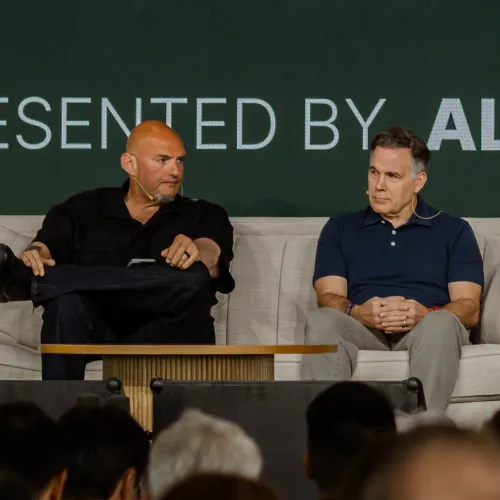
The two PA senators made the pragmatic-center case that the AI buildout is, politically, a blue-collar jobs story, and warned that the anti-datacenter backlash now unites the far left and far right into a single horseshoe.
- PA has become a hotspot for hyperscaler datacenter buildout, but opposition remains significant.
- The organizing frame for both parties' center is US-vs-China competition in the manufacturing and infrastructure that supports AI.
- The datacenter buildout is a construction, trades and logistics jobs driver, with roughly two logistics jobs per datacenter job, reversing decades of PA population decline.
- One obstacle is a coordinated misinformation campaign conflating "AI" with datacenters, which both senators argue is fueled in part by foreign actors including China.
- PA sits on the world's 4th-largest natural gas reserves and energy security was framed as national security.
 Chamath's read
Today's opposition to AI datacenters mirrors the earlier opposition to shale-gas fracking, a once-controversial buildout that became foundational to American energy.
- Fetterman reframes datacenter moratoriums as a "China-first" policy and refuses to join a "party of Luddites", willing to risk a primary over it, and now defends the filibuster as a tool that forces compromise.
- McCormick names the K-shaped economy and wealth concentration as an existential problem for capitalism, proposing non-government, incentive-based fixes, "Invest America" accounts and school choice.
- In the Bestie reactions, Sacks branded it the "blue-collar boom"; Friedberg argued freer markets aid mobility; Jason vented at both parties over a $40T debt and special-interest money.
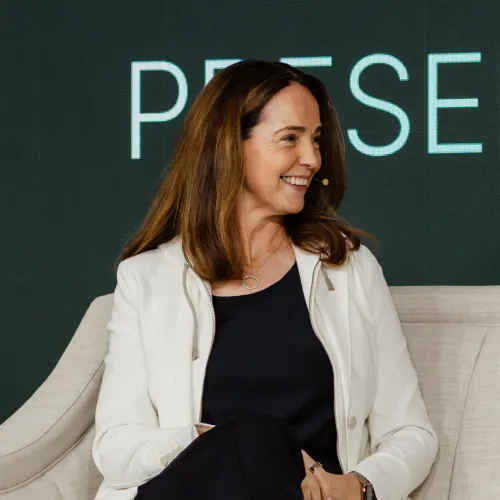
OpenAI's CFO laid out the clearest public picture yet of the company's compute-financing flywheel. Bigger models drive efficiency and margin, margin buys compute, and the binding constraint isn't 2026, it's 2030–2032.
- OpenAI is building the AI intelligence layer. Being the "front door" compounds advantage across many interfaces (users, data, personalization, margins).
- The financing structure is the real story. CSP (cloud service provider) partnerships convert CapEx to OpEx, riding partners' investment-grade balance sheets OpenAI can't access alone, stretching the same dollars across far more compute.
- Shifting from cost-plus to priced-to-value. The $122B March raise was "just another way to fundraise," and an IPO is framed the same way, optionality, not a destination.
- Compute is seen to be most constrained in 2030–2032, not now. That could change depending on future buildout. The next big training run lands in the fall on Vera Rubin chips.
Chamath's read- Chip diversification is broader than commonly noted. NVIDIA, AMD, Cerebras, and Broadcom co-development, across CSPs from Oracle and CoreWeave to Microsoft, GCP, AWS and neoscalers.
- On the ad question, a potential platform move could fuse search-like intent with Meta-like memory/context, but governed by an "best result over sponsorship" principle. This model could fund broad free access while preserving ad-free tiers.
- The convergence thesis stated plainly is that the stack (cloud, chips, models, apps) is collapsing together, and advantage accrues to the layers closest to customer value.
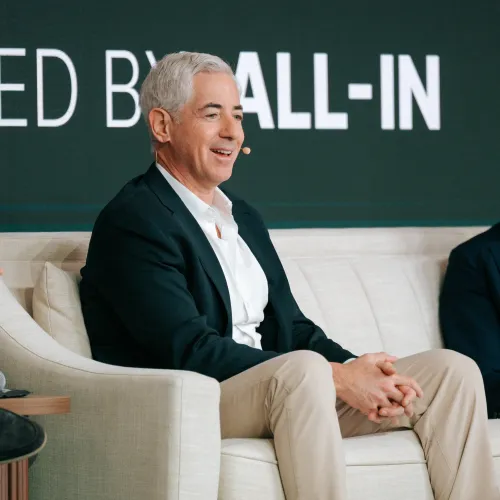
Ackman argued that in the AI era, one of the scarcest edge is a long time horizon. Supportive, concentrated shareholders let founder-led companies make 3–5 year bets while everyone else is captured by the next quarter.
- The disease of public markets is short-termism. A supportive shareholder extends the strategic horizon. "Time is more valuable than ever."
- Business quality and durable, protectable growth have overtaken the early-career focus on cheap, liquid names. Moats are everything. We are in "the greatest era to build a business ever, and the probability of being disrupted has gone up enormously."
- High-quality "old tech", Amazon, Meta, Microsoft, is being overlooked in the rush to the new new thing, an echo of Berkshire during the dot-com bubble.
- He's building a modern Berkshire by reshaping Howard Hughes (HHH) into an insurance-backed compounding vehicle, managing the asset side, not just liabilities.
Chamath's read- Every business is either invested in AI or threatened by it, the central job for a long-term investor is underwriting durability and disruption risk from agile competitors.
- Founder advantage is sharpened. Founders have the authority and personal stake to make the radical decisions a professional CEO with a short tenure won't.
- He evaluates the giant late-stage privates (SpaceX, OpenAI) through an explicit venture lens, people, opportunity, context, and the deal.
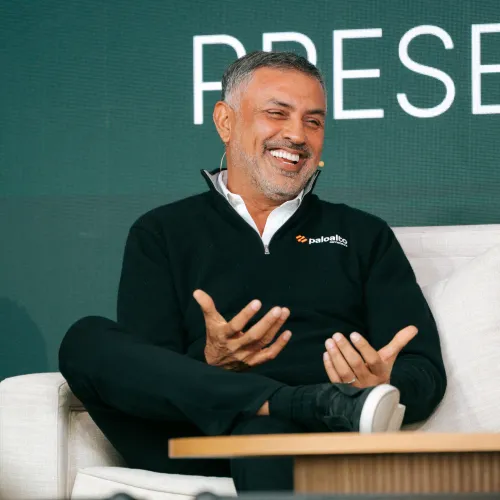
Arora's blunt message was that analytical SaaS is "over". Value migrates to AI-native application systems, and the offense-defense race in security is about to accelerate, with autonomous exploit-chaining "three months away" from the wild.
- "If you're an analytical SaaS data company, it's over". Today you can run a model against the data. Models become the utility layer while profit pools live in applications.
- The frontier security threat is near. On Mythos, models find vulnerabilities and daisy-chain them, creating more vulnerabilities. Open source is "three months away" from these capabilities being in the wild.
- The IP is tiny and fragile. Frontier weights fit on a USB stick, a new model distills in ~24 hours, and the closed-to-open edge is only ~3 months.
- Work goes headless, kill the UI, rewire the systems of work. The audit trail improves because humans stop touching the data. Codex and Claude Code attack the application-layer profit pools directly.
Chamath's read- The near-term national-security risk is economic chaos via basic breaches, credential theft, supply-chain disruption, vulnerable small offices, not cracking hardened infrastructure.
- His M&A focus is shifting from product tuck-ins toward identity and agentic security. AI-driven operational excellence could justify broader acquisitions.
- The hardware bottleneck is production, not design, everything is backordered globally. Financial services resist the cloud because latency directly costs money.
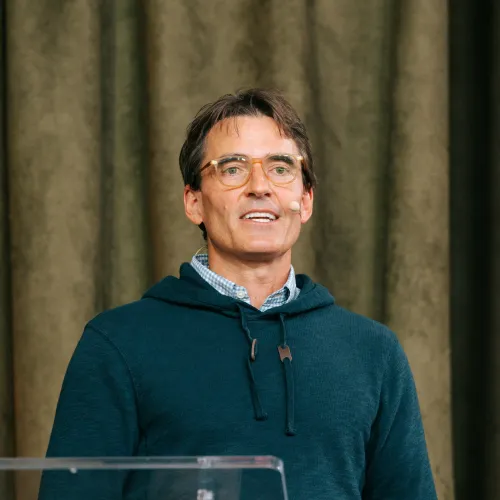
Laffont's data-driven read: the unicorn economy is healthier but radically concentrated, and the coming SpaceX / Anthropic / OpenAI exits will dwarf the entire 2021 peak, with hyperscalers now funding their own disruptors.
- Fewer unicorns, each raising far more, funding per unicorn is up 5x since 2021. The "unicorn factory" peaked in the ZIRP bubble and has normalized.
- A dominant index is emerging, a "Magnificent Eight" (SpaceX, Stripe, Anthropic, Databricks, Revolut, ByteDance and more) collectively nearing $4 trillion, outperforming the public Nasdaq 7.
- SpaceX listed and Anthropic and OpenAI filed confidential S-1s. Those impending IPOs alone may exceed combined exits of the prior decade.
- The structurally new dynamic is that hyperscalers are funding the disruptors. SpaceX valuation tracks launch cadence, evolving from one-off launches to recurring constellation and platform revenue.
Chamath's read- The pre-ZIRP cohort (~73 cos) saw ~80% raise or exit by 20 quarters, and the 2021 cohort (479 cos) is under 20%, over-creation during ZIRP. The 2024 AI cohort is the open question.
- The AI market is sized at ~$140B today headed toward ~$300B in 2026, doubling again by 2027. This expands across consumer subscriptions, AI-enabled ads (~$150B potential), and enterprise (Claude Code, Codex).
- Buying the top 10 by market cap and rebalancing annually has historically won over decades, and he calls the "AI models are commodities" claim "thoroughly disproven."
- His SpaceX framework combines telco/service-provider profit pools of $200–400B that Starlink's reliability can attack. Valuation-per-launch rises as cadence scales.
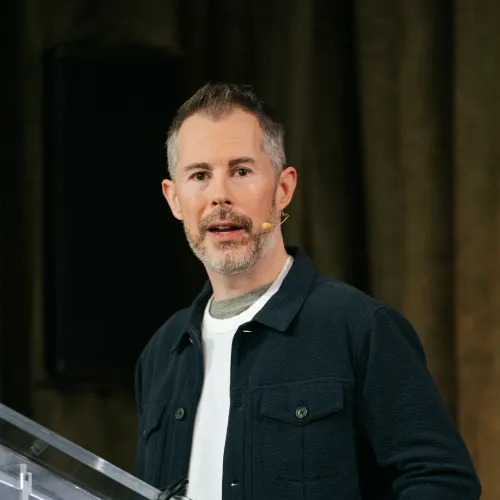
Maris delivered a contrarian's warning that we're at the "Atari command-line stage of AI," the real value comes from the machinery around the models (not bigger models), and small funds beat large funds.
- "We're at the Atari command-line stage… we'll reach the PS-10 stage in 5 years." What gaming did over 40 years, AI will do in 5, and "I don't plan on investing in larger models."
- Sub-$750M funds outperform: they make up 95% of top-decile performers; the return math for multi-billion-dollar funds is nearly impossible. The GP incentive to gather fees over generating returns is broken.
- Core creed: "don't bet against computer science", right CS + right data + right problems yields the right answers.
- Sharp IPO warning that retail risks holding the bag after lockups release.
Chamath's read- Pursue what looks like the future even when it requires unconventional acts. Insane ideas hide a secret about the future. Don't bet against computer science. Small funds mathematically outperform.
- The concrete disruption risk is that foundational model providers like OpenAI could face severe margin pressure if Google slashes equivalent prices, a direct read-through to the open-source/commoditization debate.
- The next five years of AI will mirror decades of gaming evolution. The biggest opportunities are the physics engines and controllers, not larger models.
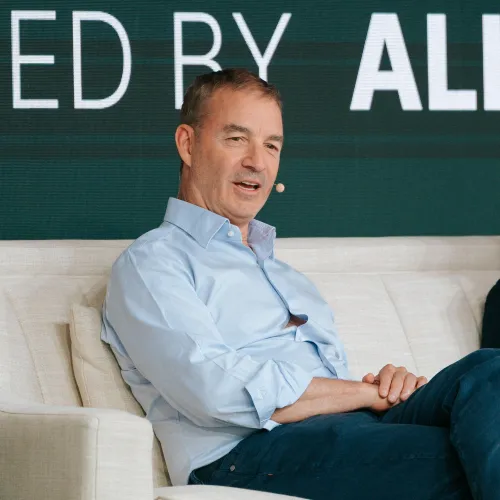
Loeb's edge is increasingly qualitative. In a market where bad shorts get squeezed and great assets stay private, the durable alpha is judging management and moats, and there's still rich opportunity on the short side.
- Management incentives are the tell, and the best entry points came when comp packages were sandbagged. Finding great, adaptable teams is the hard-to-quantify edge.
- Moats and durability are everything. The "time value" of a company, will it survive, is the crucial lens right now.
- Plenty of opportunity on the short side, but avoid pure-valuation shorts as too many "run over by shorts with dumb valuations that get captured on Reddit." Some space names fit.
- Contrarian on a consensus short as he argues Nvidia is undervalued, mis-processed as a "safe short" the way Amazon and Google once were.
Chamath's read- His arc was from anonymous internet chat boards as an activist, to distressed-debt reps, to a multi-strategy fund, evolving from event-driven complexity toward business quality and innovation.
- Assessing management is a subjective, qualitative skill built over decades of pattern recognition, the part he believes resists automation.
- Significant philanthropic thread through education reform and criminal-justice reform, including his role in securing the Ross Ulbricht pardon.
Tuesday, June 2, The Besties open Day 2
Chamath, Friedberg and Calacanis opened the second day by reframing the whole event around the coming liquidity wave. Captured as one session, since it ran as one conversation.
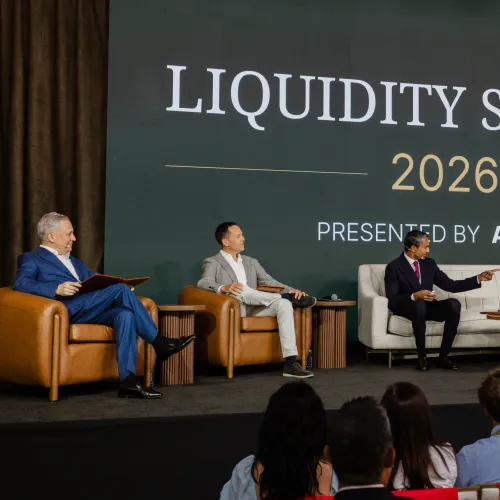
The hosts reframed the event around a coming liquidity wave: as the mega-IPOs return tens of billions to LPs, a barbell of capital forms, proven managers on one side, a swarm of emerging micro-managers on the other, while "as goes AI, so goes GDP and energy."
- Chamath: capitalism is alive and well, global institutions have failed and this room should build the new ones. AI is bifurcating into enterprise and consumer profit pools, both good. "The US can't borrow at 100 years, but Google can."
- Friedberg: the IPO wave leaves LPs asking what to do with returned capital, expect a barbell of reliable capital plus many small bets on emerging managers who, if they hit, become the other end. On Google: cost of equity now cheaper than debt, ~27x EBITDA.
- Calacanis: OpenAI isn't as reactive to Anthropic as assumed, it has its own gameplan.
Chamath
Capitalism alive and well. Drawing inspiration from the Koch brothers, we need to mirror that and do better. The global institutions have failed; we need to build new ones from the people in this room. Yesterday was level-setting, high context; today is the front-runners. As goes AI, so goes GDP and energy. AI is bifurcating, profit pools are enterprise and consumer, and both are good. The US can't borrow at 100 years, but Google can.
Friedberg
Recurring theme: the massive wave of liquidity from the upcoming IPOs. Institutional LPs receiving capital back face the question of what to do with it. A growing class of micromanagers, a barbell of proven reliable money on the stable side, plus many small contributions to emerging managers. If those hit, they become the other side of the barbell. More props to Sarah, the $122B raise, the largest ever. On Google, cost of equity cheaper than debt right now, trading at 27x EBITDA.
Calacanis
OpenAI is not as reactive to Anthropic as assumed and has its own gameplan.
Tuesday, June 2, Panels & Day 2 Keynote
The second day focused on panels and pitches. Discussions explored where compute physically goes, what powers it, and how the liquidity actually clears.
Dreyfus made the materials case underneath the entire AI story. After decades of "capital-light" growth and offshoring, the US faces a demand shock (reindustrialization + AI + EVs + defense) colliding with a supply shock (decades of underinvestment), a structural, multi-decade commodity cycle, not a trade. Copper is the cleanest expression.
- The headline math is that humanity mined 700M tons of copper over 10,000 years; the next 18 years need another 700M. That requires five new tier-one mines online every year when new mines take 7–12 years. He expects copper to at least double.
- Simultaneous trillion-dollar capital cycles across aerospace ($1T+ backlog), the aging grid ($1T+ every few years), datacenters (~$1T/yr), semiconductor fabs ($750B+) and rising defense, all dependent on critical minerals and refining that China largely controls.
- The durable chokepoint is processing, not raw materials. China dominates it, and US catch-up takes 10–20 years even with aggressive Dept. of War / Dept. of Energy backing.
- Silver is running a 200M-oz annual deficit against ~600M oz above-ground inventory, a credible stock-out in ~3 years. The under-appreciated bottleneck across all of it is skilled craft labor.
- The debasement thesis of the US dollar against $40T of US debt (rising $2.5T/yr) and ~$100T of unfunded liabilities versus $5.5T of annual receipts. The next recession requires printing "gigadollars", echoing the 1970s, when the dollar lost 70% of purchasing power.
- The play is exposure to copper, silver, other minerals, and the service providers and skilled labor supporting reindustrialization, hard assets as the cleanest purchasing-power hedge.
- Copper intensity makes the AI link concrete. Solar uses 5x more copper/MW than gas, wind 7x; EVs 5–6x more than ICE; military copper isn't recycled.
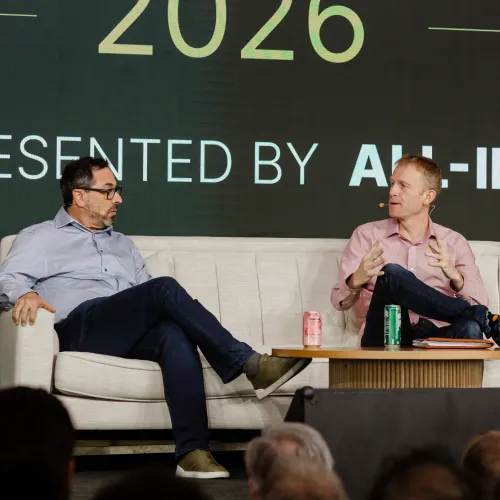
Two freshly public founders on what the IPO actually changes (less than you'd think) and the secular trends underneath them. Compute is a data-movement and power problem, and within a decade most new compute may move to space, where 24/7 solar and falling launch costs flip the economics.
- Feldman (Cerebras): the hard part of AI is moving data from memory to compute, wafer-scale puts fast memory next to compute for a 10–20x leap over a GPU. Going public was bureaucratic "garbage," but the day after, the business is unchanged; the real payoff was validation for employees and their families.
- Marshall (Planet): AI models are "blind" to the real world, the next frontier is real-time planetary intelligence ("Large Earth Models"). Public-company credibility matters most with governments and large enterprises; security/defense is now ~60% of revenue.
- Space datacenters: driven by a 4–5x drop in launch costs and satellite miniaturization (the mainframe-to-desktop transition), Marshall predicts most new compute is built in space within a decade, cheaper via constant solar.
- Gerstner: a16z's push to stay private longer hurt retail upside, a trend that may now be reversing; Planet is a public-venture-style success.
- Feldman's two founding bets stated cleanly are that AI needs dedicated silicon, and that silicon cannot resemble a GPU, to be 20x better it had to look fundamentally different.
- "Historically, more value is created for investors after a company's IPO than before", a direct counter to the Maris "retail holds the bag" warning, and a tension worth holding.
- Marshall's frame was as AI moves beyond language models to real-world sensing data, the same architectural leap will applied to the planet. Planetary intelligence.
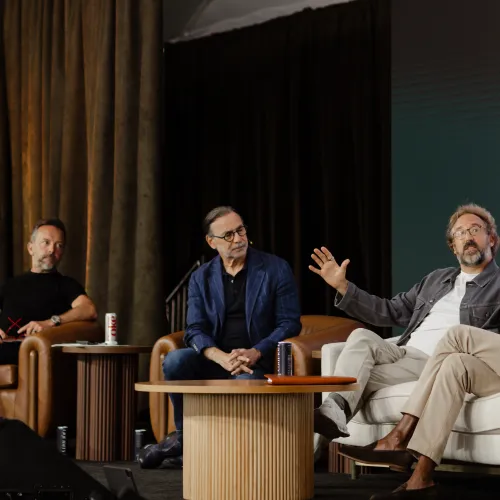
Secondaries have flipped from discount to premium and become a third exit path, long-only funds are about to unleash hundreds of billions into pre-IPO names. Gerstner selling into record volume and Chamath asking whether retail becomes the exit liquidity.
- The structural shift is that long-only mutual funds can hold up to 15% in privates but historically cap at 3–5%. As the giants list, that unlocks hundreds of billions from the largest pools in the world.
- Secondaries are now an asset class, trading at a premium to NAV (volume doubled vs. the 2021 peak). Schwab and Forge are building the regulated infrastructure to reach ~30–46M investors and $12T in assets.
- The caution signal was that Gerstner has turned measured, "when people tell you to YOLO into SPVs, it's time to be careful". He is selling into the global secondary market at record volume.
- Baker commented that secondaries are necessary for employee liquidity ("paper rich, cash poor"), and companies should go public sooner for the rigorous feedback that the sycophantic private market lacks. Funds without OpenAI/Anthropic/SpaceX are "doing unusual things", writing call options, chasing, out of DPI fear.
Chamath's readThe hyperscaler tier is the most complicated, with the thinnest margins, forced to compete both up at the application layer and down at the silicon layer against players who have far more profit dollars to pour in. "You're going to have to become hyper-efficient, and it's not clear to me that the hyperscalers know how to do that."
- Tokenization can make secondary and fund trading more efficient, but LPs likely prefer liquidity in specific winners over whole fund interests.
- Secondary opportunities the panel named: Revolut (neobank), Zipline (drone delivery), Sierra (Brett Taylor's agent platform), Aria/DriveNets (inference disaggregation, networking), NeuraRobotics (European logistics robotics, ~$100M rev), and Vast (space stations).
- Rodriques' frame was an eventual private-to-public path for all; retail entering should look downstream to names "not on CNBC yet."
The practical response to the liquidity wave is a barbell capital deployment, with a move toward big, trusted entities on one end and emerging fund managers on the other. Expectations are that capital allocators may avoid the squeezed middle. It's the same structure Friedberg framed in the morning and that Laffont's concentration data and Chamath's "own the entity past $100B" rule both point toward.
Best-Ideas Pitch Block
Four high-conviction ideas, each pitched to the judges. Notably off-theme as only one is a direct AI play. Dreyfus (Talen) won the audience vote while Cowen (MGM) won the Bestie vote.
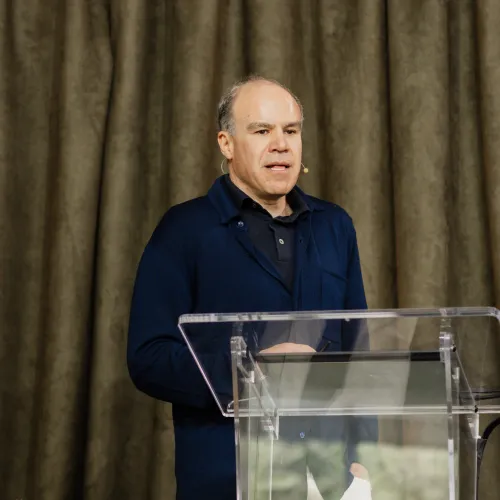
Long MGM, not a Vegas bet but a sum-of-the-parts story: an approved Osaka casino license and a Dubai optionality asset sit inside a company where Barry Diller owns ~26% and management has bought back roughly half the float in six years.
- Osaka IR: MGM owns 40% and will manage; ~$2B potential EBITDA. Japan's ~$40B gambling market rivals Macau and exceeds Vegas, and sits closer to Chinese demand than Macau or Singapore.
- Dubai optionality: ~300,000 sq ft reserved for gaming conversion pending legalization; Wynn's 2028 opening may catalyze the policy change.
- Capital structure: Barry Diller's ~26% stake (and a $48 bid) plus aggressive buybacks reducing float support the valuation.
- Timing: markets typically price casino expansions ~3 years pre-opening; Osaka's 2030 schedule points to recognition around 2027.
- Judge questions centered on credit and entertainment modeling; answers leaned on MGM's customer database and loyalty program as the engine for international scaling.
- The off-theme appeal of a regulatory-optionality play (Japan ramp + Dubai legalization) on top of a buyback, exactly the kind of non-AI idea that can win when capital is crowded into compute.
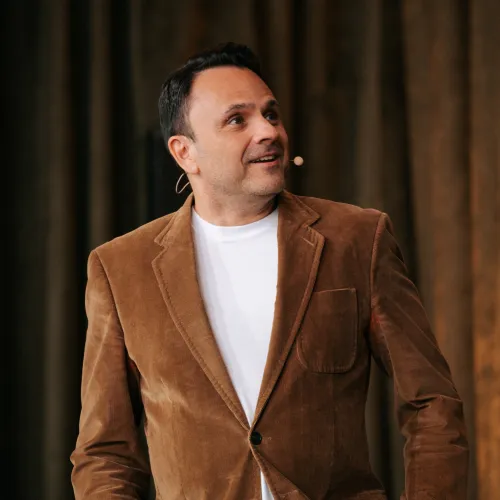
Long Talen, buy a hard power asset at half replacement value into a structural, multi-decade power shortage that doesn't even need AI to work. The application of his macro keynote to a single name; it won the audience vote.
- Core: "You don't need AI demand to keep power tight for the next 20 years." Buy a hard asset below replacement cost, hold, sell at a premium when the market wakes up.
- Talen = 2GW nuclear + 6GW gas, trading at ~half replacement value.
- Multiple FCF paths from rising power prices, datacenter contracts, and new capacity; hyperscaler desperation for firm power (e.g., the Three Mile Island revival) drives base-load value whether in front of or behind the meter.
- On the AI-electricity-price question he used a "highway" analogy: you don't need all lanes at 4am but you do at peak, PPAs with datacenters fund batteries to manage peaking.
- On regulatory risk and multiples, assume a blended 15x as a safe baseline, uncontracted merchant power should trade lower, more contracts earn a higher multiple.
- Co-location of power is not needed for the base scenario, addressing a common objection up front.
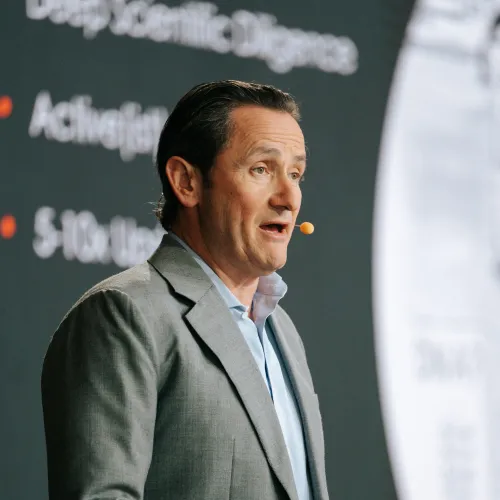
Long Aktis, a precision radiotherapy ("autonomous cancer-cell assassination") play whose moat is the radioisotope supply chain itself: because the input is a byproduct of US nuclear-weapons waste, it's effectively off-limits to China. Price target $200.
- AKTS delivers cell-limited radiation via actinium payloads on mini-proteins, the latest step in cancer treatment (surgery → chemo → targeted → immuno → precision radio). Clinical trials began last year.
- The moat: the modality is very hard to replicate, and because it relies on radioisotopes sourced from US nuclear-program waste, China is locked out of the supply chain.
- De-risked via validated targets and imaging-confirmed delivery early in trials, with a strong cash runway.
- Big pharma is a hungry built-in acquirer (Lilly, Bristol, Novartis named) for radiotherapy assets. Price target $200.
- On questions of the defensibility of the moat against Chinese replication, the answer anchored on supply-chain constraints. The input radio-element is a byproduct of US nuclear-program waste.
- EcoR1's edge is a margin of safety, deep diligence, and activist involvement in a sector that "feels more like a casino than a financial market." On AI disruption: a small internal AI skunkworks.
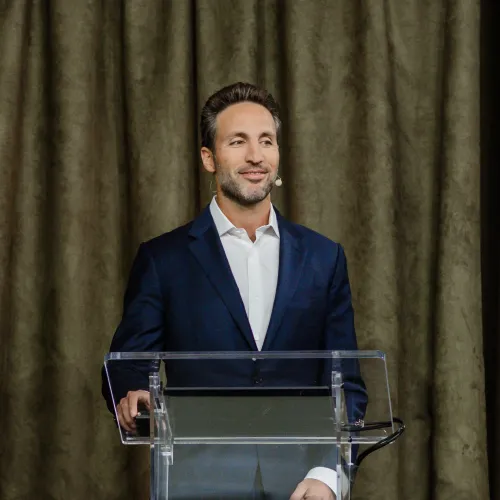
Long GEODNET, a crypto-incentivized DePIN that has bootstrapped the world's largest and fastest-growing precise-location (RTK) network, monetizing into precision agriculture and consumer robotics, while routing 80% of corporate revenue to token buybacks.
- GEODNET = decentralized RTK delivering centimeter-level accuracy, built on home-deployed base stations, the largest and fastest-growing such network in the world.
- Demand drivers included precision agriculture, a supplier relationship to TomTom (which supplies AV companies), drones, robotics, and the next wave of consumer robotics (robotic mowers, ~1M units estimated this year).
- Capital-efficient flywheel: ~80% of corporate revenue contractually used to buy back tokens, effectively a securitized revenue share to holders.
- Traction highlighted of revenue run-rate ~$11M, 3x YoY growth, FDV ~$150M viewed as undervalued.
- On the competitive stance: ground-based RTK wins on cost and energy vs. microsatellite alternatives; hybrid systems are possible, but battery-sensitive applications favor RTK.
- Judge questions probed company/foundation/team location (US-based) and how value accrues between the company and the equity/token.